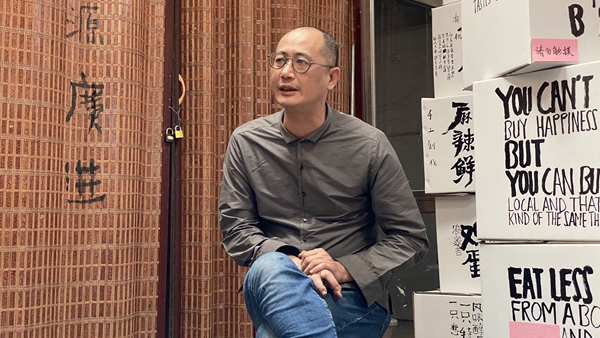
Qiu Zhijie
Introduction
Qiu Zhijie is a prominent Chinese contemporary artist, curator, and educator known for his innovative approach to integrating traditional Chinese art forms with contemporary artistic practices. His work spans a wide range of media, including calligraphy, installation, performance, video, and photography. Qiu's artistic philosophy is deeply rooted in Chinese culture, history, and philosophy, often exploring themes of continuity and transformation. As a curator, he has organized significant exhibitions that reflect on cultural and social issues, both in China and internationally. His contributions to the art world have been recognized with numerous awards and accolades, solidifying his status as a leading figure in the global art community.
Early Life and Education
From a young age, he exhibited a keen interest in the arts, particularly in Chinese calligraphy, which he began learning as a child. This early exposure to traditional Chinese art forms laid the foundation for his future work, which often incorporates elements of calligraphy. Qiu pursued formal education in the arts at the China Academy of Art, where he graduated from the printmaking department in 1992. His academic journey was characterized by a deep engagement with both traditional and contemporary art practices, allowing him to develop a unique artistic voice that bridges the past and the present. Through his studies, Qiu acquired a comprehensive understanding of the technical and theoretical aspects of art, which he later applied in his multifaceted career.
Artistic Career
Qiu Zhijie's artistic career is marked by a diverse body of work that challenges conventional boundaries and explores the interplay between tradition and modernity. His practice encompasses various art forms, including painting, installation, and video art, allowing him to experiment with different techniques and materials. Qiu is particularly known for his use of calligraphy, which he employs not only as a visual element but also as a conceptual tool to convey complex ideas. His work often reflects on the role of art in society, advocating for its integration into everyday life and its potential to foster cultural dialogue.
Key Exhibitions
Throughout his career, Qiu Zhijie has participated in numerous exhibitions both in China and internationally, showcasing his innovative approach to contemporary art. One of his notable curatorial projects was the Chinese Pavilion at the 57th Venice Biennale, where he explored the theme of "eternity" through the concept of "Continuum – Generation by Generation." This exhibition featured works by both contemporary and traditional Chinese artists, emphasizing the enduring energy of Chinese culture. Another significant exhibition was To the People, Food is the First Necessity, held at the Sanyuanli market in Beijing. This project exemplified Qiu's commitment to bringing art into public spaces, using calligraphy to engage with the local community and highlight the intersection of art and daily life.
Artistic Style and Influences
Qiu Zhijie's artistic style is characterized by a fusion of traditional Chinese art forms with contemporary media, creating a distinctive aesthetic that resonates with both historical and modern contexts. His work is heavily influenced by Chinese philosophy and literature, often drawing on classical themes such as mountains and water, which symbolize eternity and the continuous flow of time. Qiu is also inspired by the notion of "living art," which emphasizes the integration of art into everyday experiences. This philosophy underpins many of his projects, as he seeks to dissolve the boundaries between art and life, encouraging viewers to engage with art in a meaningful and accessible way.
Curatorial Projects
In addition to his work as an artist, Qiu Zhijie has made significant contributions to the field of curatorial practice. His curatorial projects are informed by his deep understanding of Chinese culture and his commitment to fostering cross-cultural exchange. Qiu's approach to curating is characterized by a collaborative and inclusive ethos, bringing together artists from diverse backgrounds to explore shared themes and narratives. His projects often focus on themes of continuity, transformation, and the intersection of tradition and modernity, reflecting his broader artistic and philosophical interests. Through his curatorial work, Qiu has played a pivotal role in shaping contemporary art discourse and promoting Chinese art on the global stage.
Academic Contributions
As an educator and academic leader, Qiu Zhijie has made substantial contributions to the development of art education in China. He serves as the director of the School of Experimental Art at the Central Academy of Fine Arts, where he has been instrumental in shaping the curriculum and fostering an environment of innovation and experimentation. Qiu's teaching philosophy emphasizes the importance of integrating traditional art forms with contemporary practices, encouraging students to explore new media and interdisciplinary approaches. He is also involved in academic research, exploring topics such as the relationship between art and technology, and the role of art in transcending cultural and disciplinary boundaries. Through his academic work, Qiu continues to inspire and mentor a new generation of artists, contributing to the evolution of contemporary art in China and beyond.








